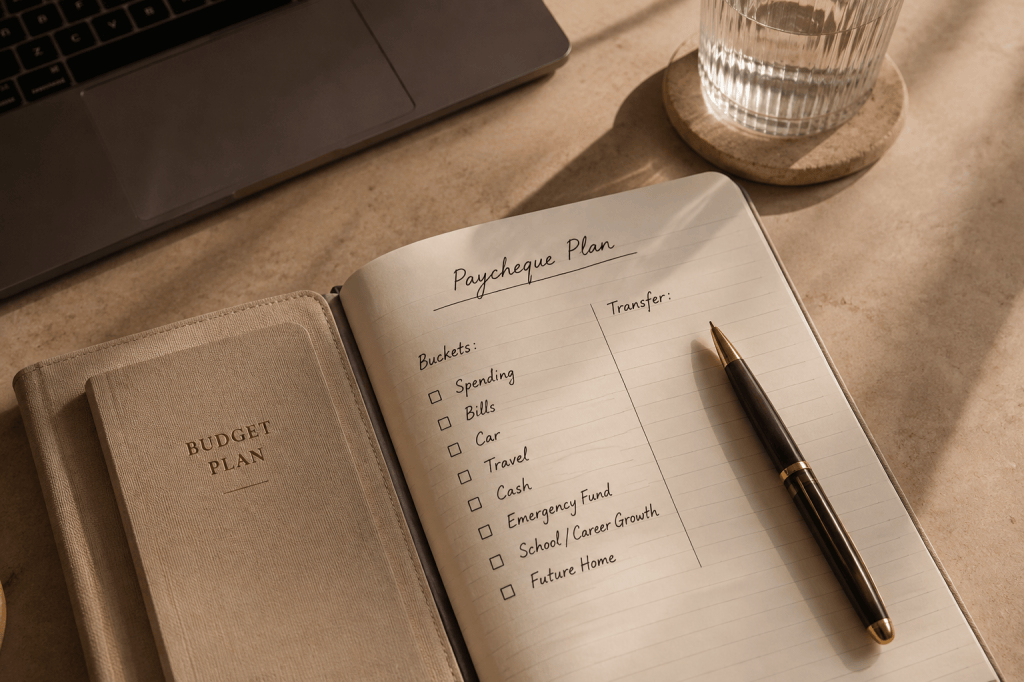
As a student, I am balancing work, classes, saving, bills, transportation, travel, and everyday spending at the same time. A single chequing account can make every dollar feel available, even when some of it already has a job. My approach is to divide each paycheque into eight buckets as soon as it arrives. The amounts can change from semester to semester, but the basic idea stays simple: plan for regular costs, leave room for real life, and make progress on longer-term goals without pretending my budget is perfect.
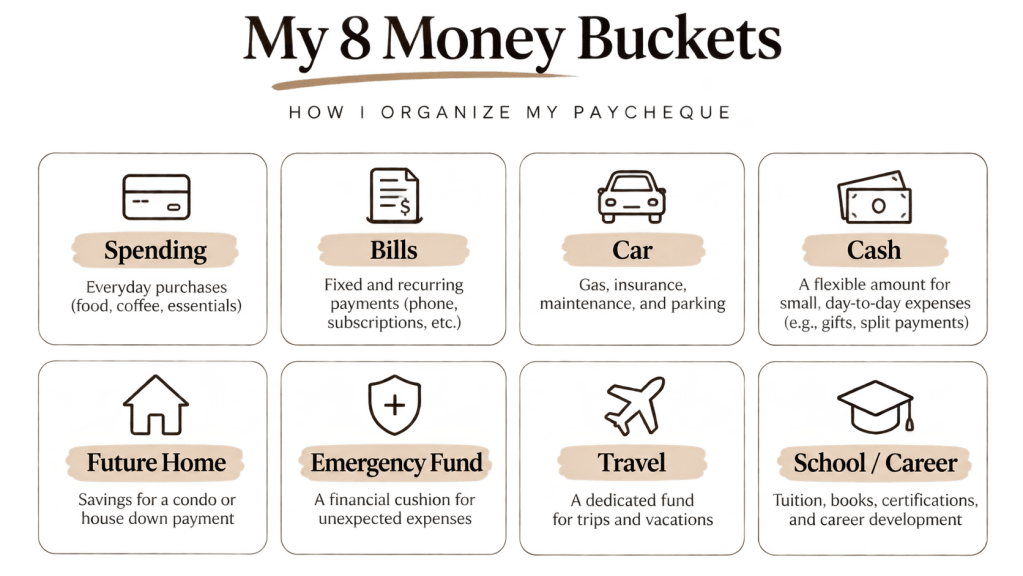
Why Buckets Instead of One Account?
When money sits in one account, it is easy to lose track of what is committed and what is genuinely free to spend. Giving each dollar a category makes the trade-offs easier to see. I can account for school and transportation while still keeping room for coffee, a meal out, or an occasional trip. These buckets are not rules that never change; they are a practical starting point that I can review when my work hours, class schedule, or expenses change.
1. Spending
This is my guilt-free everyday spending money: coffee, takeout, entertainment, small purchases, and other things I choose to enjoy. I set an amount that fits after my essential costs and savings priorities are considered. Having a clear limit helps me spend without constantly second-guessing every purchase. If the amount needs to change during a busy or expensive month, I would rather adjust the plan deliberately than treat the whole budget as unlimited.
2. Bills
Rent or housing costs, phone, internet, subscriptions, and other recurring bills belong here. I estimate the monthly total and set that money aside before treating the rest of the paycheque as flexible. Some bills are predictable and some can change, so I check the amounts regularly. Keeping this bucket separate makes due dates easier to plan around and reduces the chance that everyday spending will compete with obligations that have to be paid.
3. Car
Gas, insurance, transit alternatives, parking, maintenance, and other transportation costs can add up in small ways. I use this bucket for the transportation I actually rely on, whether that includes a car, occasional rides, or a mix of options. The point is not to guess a perfect number; it is to recognize transportation as part of the cost of working, attending classes, and getting through ordinary weeks instead of leaving it as an afterthought.
4. Travel
Travel can mean a planned weekend away, visiting people, a school-related trip, or simply setting money aside for future plans. I do not need to travel constantly for this bucket to be useful. Putting aside smaller amounts gives travel its own place in the budget, so it can be considered alongside bills and savings rather than being treated as an unexpected drain on another category. The amount can be paused or reduced when other priorities are more important.
5. Cash
Cash is my liquid, flexible bucket for needs that do not fit neatly into the other categories. It can cover a small change in plans, an ordinary purchase I did not anticipate, or a gap between fixed budget lines. This is different from a long-term goal because the money is meant to stay accessible. Keeping a modest flexible amount helps the rest of the plan remain realistic without turning every unplanned expense into a crisis.
6. Emergency Fund
The Emergency Fund is for genuinely serious, unexpected costs that I cannot reasonably handle from regular spending or Cash. It is separate from flexible money because the purpose is to build a layer of protection over time. As a student, I may only be able to contribute a small amount, and that still gives the category a place in my plan. I treat it as money for significant disruptions, not a convenient source for routine purchases.
7. School / Career Growth
Textbooks, course materials, fees, software, certifications, interview clothing, and other career-related costs belong here. School and work goals can require spending that does not happen every month, so setting aside money gradually makes those costs easier to anticipate. I think of this bucket as supporting future opportunities while I am still studying. Its amount can reflect my current course load, work plans, and what I can realistically set aside.
8. Future Home
Future Home is one of my biggest long-term financial goals. I’m actively saving toward my first home, and having a dedicated bucket helps me make consistent progress without needing to share exact amounts. It’s a reminder that small contributions can support bigger plans.
Where My TFSA Fits In
Once my short-term priorities are covered, I can consider putting additional money toward longer-term saving and investing through a Tax-Free Savings Account (TFSA). The right choice depends on my circumstances, goals, time horizon, and understanding of the account and any investments involved. I am not giving personal financial advice, and a TFSA does not guarantee a particular result. For official information about TFSA rules, contribution limits, and how the account works, the Government of Canada’s TFSA guide is a useful place to start.
A Few Honest Lessons
- Automate what you can. Moving money soon after a paycheque arrives can make the plan easier to follow.
- Start small. A simple amount that fits my current income is more useful than a detailed plan I cannot maintain.
- Review every semester. Work hours, class schedules, transportation, and expenses can shift, so the bucket amounts should be adjustable.
- Leave room for real life. A budget works better when it includes flexible spending and does not assume every month will look identical.
Where to Learn More
I am not a financial advisor; I am a student trying to make a flexible system work alongside school and work. For trustworthy, unbiased information about budgeting, saving, and managing money as a student, the Financial Consumer Agency of Canada has free budgeting resources worth exploring. If you want a general budgeting resource or framework, take a look at my Budget page.
The goal is not to divide every paycheque perfectly or predict every expense. It is to give regular costs, flexible needs, school and career plans, transportation, travel, and longer-term goals somewhere to live in the plan. I can begin with the buckets that matter most right now, check the amounts against my actual life, and adjust as my circumstances change. That feels more practical than waiting for a perfect budget before getting started.


Leave a Reply